A new article in the Journal of Food Protection argues that effective food safety systems depend as much on how science is generated and communicated as on the science itself. Authored by Carmen Diaz‑Amigo, Leticia Bartolomé del Pino, Vittorio Fattori and Catherine Bessy, the paper sets out a shared responsibility agenda for scientists, regulators, industry and communicators to strengthen trust and decision‑making across the food chain.

Food safety decisions increasingly rely on complex, fast‑moving evidence—from novel foods and processing technologies to AI‑enabled monitoring—while public scrutiny and misinformation risks grow. The authors stress that robust, transparent science must be paired with consistent, understandable communication to support risk assessment, policy development and implementation of controls globally.

Core messages

Science must be rigorous, transparent and accountable: limitations and uncertainties in data should be explicitly assessed and communicated when informing regulations and management decisions.

Institutional frameworks should promote integrity: systems that reward reproducibility, appropriate interpretation of data and avoidance of “spin” help ensure evidence used for policy is fit‑for‑purpose.

Trust depends on both evidence and communication: clear, consistent messaging across stakeholders—risk assessors, managers, industry, media, educators and consumer groups—is essential to maintain credibility.

Accurate scientific communication is a shared responsibility: from study design to publication and policy uptake, each actor has a role in preventing misinterpretation and over‑extrapolation.

Novel tools, including AI, require careful evaluation: benefits for detection, surveillance and forecasting must be weighed against risks such as biased data, explainability gaps and premature deployment.

UNI EN ISO 22005

Communicating the quality and traceability of agri-food production is a strategic priority for organizations operating in the agri-food and feed sectors, as well as for distribution chains.

Implementing an effective system to monitor activities and processes helps strengthen consumer trust and improve market transparency, in line with UNI EN ISO 22005 (Traceability in the Feed and Food Chain – General Principles and Basic Requirements for System Design and Implementation).

Equally important, however, is the establishment of clear rules and requirements for the accredited certification of traceability systems in agri-food supply chains.

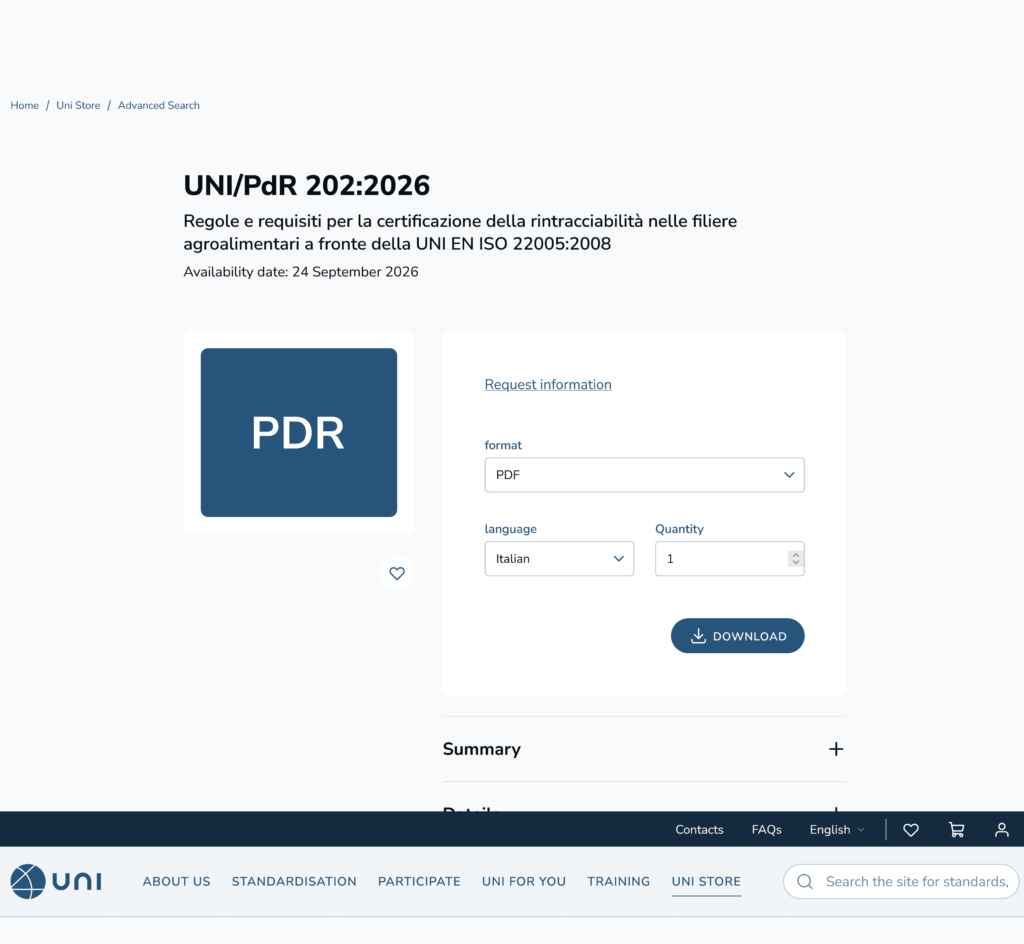
This specific need is addressed by UNI/PdR 202, recently published by UNI and now freely available through the UNI Catalogue. The document defines general requirements, including legal and contractual aspects, economic and financial considerations, impartiality management, and public information requirements. It also covers structural requirements relating to organizational governance and top management, personnel resource requirements, process requirements, and additional provisions for issuing accredited certifications in the agri-food sector according to UNI EN ISO 22005:2008.

Source: UNI.

Comunicare la qualità e la rintracciabilità delle proprie produzioni agroalimentari.


E’, questo, un aspetto strategico per le organizzazioni del settore agroalimentare (e mangimistico), nonché per le catene di distribuzione.
Attuare un efficace sistema di controllo delle proprie attività e dei propri processi migliora la fiducia dei consumatori e la trasparenza nei confronti del mercato, come previsto dalla UNI EN ISO 22005 (“Rintracciabilità nelle filiere agroalimentari – Principi generali e requisiti di base per progettazione di sistemi e attuazione”). Ma a fronte di questo, è altrettanto fondamentale stabilire regole e requisiti per la certificazione accreditata della rintracciabilità nelle filiere agroalimentari.
E’ a questa specifica esigenza che risponde la UNI/PdR 202, appena pubblicata e ora liberamente scaricabile dal Catalogo UNI sviluppata da UNI.Il documento tratta requisiti generali – con i relativi aspetti legali e contrattuali, quelli economico-finanziari, la gestione dell’imparzialità, le informazioni al pubblico – ma anche i requisiti strutturali (struttura organizzativa e alta direzione), quelli per le risorse del personale, i requisiti di processo e tutti gli aspetti aggiuntivi per il rilascio delle certificazioni accreditate nel settore agroalimentare a fronte della UNI EN ISO 22005:2008. (Fonte UNI)

PER INFORMAZIONI:UNICA Desk

https://www.basilicata.camcom.it/tutela-regolazione-del-mercato/unica-desk

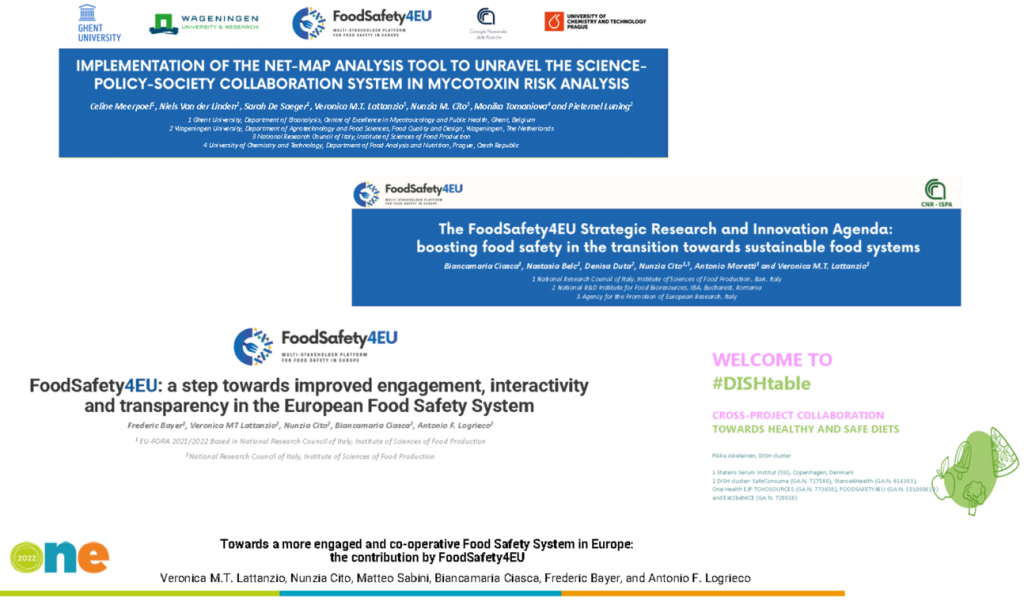
The FS4EU project posters give a visual exploration dedicated to food safety, by showcasing results and practices designed by the multi-stakeholders platform to tackle current challenges and promote a sustainable Food Safety System.
The posters are downloadable below.

Food safety is a global issue requiring global solutions. A resolution1 was passed at the 63rd World Health Assembly in May 2010 reaffirming this and outlining key actions needed to advance food safety in the coming years. One of the key elements to ensure global food safety is the ability to share data from food monitoring and other sources to better inform the development of preventive control strategies and risk-based approaches to food safety.

FOSCOLLAB is a platform accessible from internet and displaying together within dashboards various data (quantitative and qualitative) and information (e.g. expert advice) useful for food safety professionals. FOSCOLLAB allows linkages between databases based on 4 criteria: food name, hazard name, country of origin and year for data generation.

The overarching objectives for FOSCOLLAB are to assist food safety professionals by: Overcoming the fragmented availability of current food safety data and information; Providing easy access to global food safety data and information; Saving time by not needing to search and sift through numerous resources Bringing together data and information coming from animal/agriculture, food and human health areas to improve assessments linked to global public health Strengthening the underlying data sources by promoting awareness and increased utilization. (Source: Foscollab “Background” and “Objectives”)